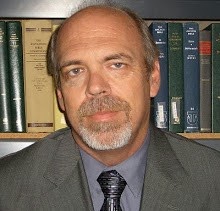
You know the old expression, "Those who can't do, teach"? It is a not-subtle slam against all teachers, but especially those at the college level and beyond. As this is what I went back to school to do, it offends me.
Let's narrow down the discussion to Bible college/seminary professors and the church. When a pastor has a question about the Bible or theology, how often does he/she call or e-mail one of our professors? Rarely. When the denomination wants to study an issue, what is the percentage of our scholars appointed to the committee. Small, if any.
Do we have the attitude of one pastor-friend who said to me years ago, "Bible college professors are failed pastors"? Or are pastors misled into thinking that with a few books, they have all they need to solve every exegetical or theological problem? These are two different issues. Let's take them one at a time.
First, I do not know the ministry experience of all of our Bible school professors. I know some who have had very good ministry experience and others who had light experience. My own experience is somewhat mixed, more than 15 years of success and failure. I even started a church (though it eventually closed).
To adopt the failed-minister attitude is unbiblical. It mocks Paul's words: But as it is, God arranged the members in the body, each one of them, as he chose....Now you are the body of Christ and individually members of it. And God has appointed in the church first apostles, second prophets, third teachers, then miracles, then gifts of healing, helping, administrating, and various kinds of tongues. (1 Cor 12:18, 27-28)
The church needs scholars and teachers. They need to be appreciated for what they can offer. They are not failed pastors, but hopefully they are successful teachers.
Second, Paul's admonition about the members of the Body of Christ should also cause us to value our scholars and professors. Most pastors are capable of constructing weekly sermons and Bible studies, and of examining simple theological issues without having to consult some expert. However, there are occassional questions that demand much deeper study and insight than the average pastor or denominational official can bring to bear. Why not talk to the people who have done this deeper study? For that matter, why not include them any time theological questions might be raised?
I hope that I will be able to convey to my students that their professors--regardless of their practical experience--are valuable in the Body of Christ and have contributions to make. Hopefully they will remember and take advantage of this resource.
Let the teachers teach, and let them do so after the student has left school.
Showing posts with label apostle Paul. Show all posts
Showing posts with label apostle Paul. Show all posts
Wednesday, June 3, 2009


Saturday, May 2, 2009
Exercise: Valuable or Worthless?
As I worked my body on the elliptical machine at the YMCA today, the verse in 1 Timothy 4:8 (in the KJV) echoed in my head: Bodily exercise profiteth little. How to reconcile Paul's admonition to my thrice-weekly routine?
The first thing to recognize (and all the commentators are in basic agreement on this) is that Paul does not say that the benefits of exercise are so little as to be no benefit at all. There is a parallel comparison with the next phrase:
For bodily exercise is little usefulness,
But godliness is all usefulness.
Well, when you put it like that, of course anything we do for our physical bodies is meaningless in comparison with having godly character. So, in context, Paul's purpose is not to preach against physical exercise (he has no other comments on the practice), but to put it in proper perspective to being like God.
Naturally, even here we could make comparisons with people who exercise obsessively or who hone their bodies to painful perfection. How chiseled do you have to be to work at a desk?
Even so, I think we need to be careful when comparing what many of us do (or should be doing) in relation to exercise when compared to Paul's time.
First, the average person in Paul's day was not in need of exercise. In truth, they "exercised" all day long--we could call it work. Farming, keeping house, woodworking, or whatever a person did all day long was physically demanding in ways that most of us do not understand. They had no machines, it was all done by hand. And legs. And back. The last thing that the average person thought after the end of the work-day was, "Maybe I should go down to the gym and lift some weights." There were many fewer seriously overweight people than we see today. And though they were smaller, they were comparatively stronger than we are on average.
Those who did the kind of exercise to which Paul refers were the athletes in each city who were trained between 16 and 18 to participate in games between cities. What they did was for show and for a short time. Their work pales in comparison to what a godly man or woman could accomplish.
Most of us, however, do not do physical labor that compares in any way to what the average man or woman did in the first century. We are rich by comparison so we eat too much. We get soft. A good steward of the body that God gives needs to get in some exercise. I had a heart-attack four years ago. Though one artery to my heart was completely blocked (there's the over-eating fatty foods), the monitors showed that I had 100% heart function. The doctor attributed it to my workout regimen.
So we need to understand Paul's point without being bound to the cultural background which makes up the literal expression that he uses to make the point. Physical exercise has much more benefit to us than to those in Paul's day. But in comparison to being godly, it is still of small importance. So let's do both: take care of our bodies and live as he wants us to.
The first thing to recognize (and all the commentators are in basic agreement on this) is that Paul does not say that the benefits of exercise are so little as to be no benefit at all. There is a parallel comparison with the next phrase:
For bodily exercise is little usefulness,
But godliness is all usefulness.
Well, when you put it like that, of course anything we do for our physical bodies is meaningless in comparison with having godly character. So, in context, Paul's purpose is not to preach against physical exercise (he has no other comments on the practice), but to put it in proper perspective to being like God.
Naturally, even here we could make comparisons with people who exercise obsessively or who hone their bodies to painful perfection. How chiseled do you have to be to work at a desk?
Even so, I think we need to be careful when comparing what many of us do (or should be doing) in relation to exercise when compared to Paul's time.
First, the average person in Paul's day was not in need of exercise. In truth, they "exercised" all day long--we could call it work. Farming, keeping house, woodworking, or whatever a person did all day long was physically demanding in ways that most of us do not understand. They had no machines, it was all done by hand. And legs. And back. The last thing that the average person thought after the end of the work-day was, "Maybe I should go down to the gym and lift some weights." There were many fewer seriously overweight people than we see today. And though they were smaller, they were comparatively stronger than we are on average.
Those who did the kind of exercise to which Paul refers were the athletes in each city who were trained between 16 and 18 to participate in games between cities. What they did was for show and for a short time. Their work pales in comparison to what a godly man or woman could accomplish.
Most of us, however, do not do physical labor that compares in any way to what the average man or woman did in the first century. We are rich by comparison so we eat too much. We get soft. A good steward of the body that God gives needs to get in some exercise. I had a heart-attack four years ago. Though one artery to my heart was completely blocked (there's the over-eating fatty foods), the monitors showed that I had 100% heart function. The doctor attributed it to my workout regimen.
So we need to understand Paul's point without being bound to the cultural background which makes up the literal expression that he uses to make the point. Physical exercise has much more benefit to us than to those in Paul's day. But in comparison to being godly, it is still of small importance. So let's do both: take care of our bodies and live as he wants us to.
Subscribe to:
Posts (Atom)